Nope. Not at all.
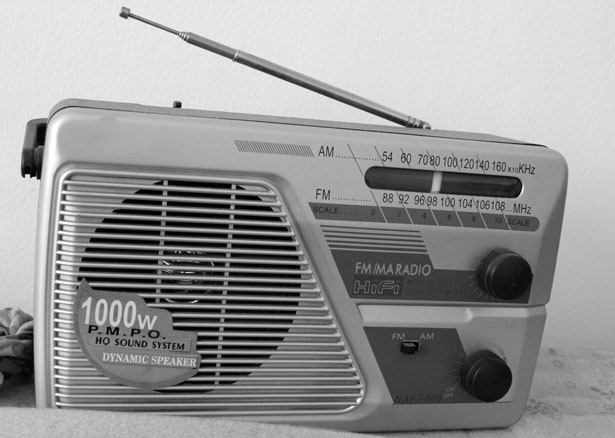
Still here!
My first day as a “professional radio broadcaster” was April 22, 2000. But I have followed the radio industry on a day-to-day basis since 1998, and if I had a dollar for every “radio is dead” thinkpiece that has been published in the past 17 years, I wouldn’t have to work.
Traditional AM/FM radio is now part of a much wider variety of audio entertainment options. Radio is now on the same plane as Pandora or Podcasts. Instead of dying, there are more options than ever. Still, listeners make their choice based on cost and ease of use. Radio may not be the best option, but it’s the cheapest and it’s the easiest to use. Turn it on and it’s there.
Look at streaming video. A “streaming TV show” seemed like a laughable concept…until advent of the Roku or Apple TV. They are tiny black boxes that plug into the HDMI port in your TV. Both devices have simple menus. Streaming video went from exotic technology to something that is indistinguishable from broadcast/cable TV. “House of Cards” is now being nominated for Emmys. However, “House of Cards” has yet to kill network TV. It simply took a big universe of video entertainment (broadcast TV, cable) and made it bigger. Streaming video is the equivalent of pioneers looking over the next mountain to find acres of arable land.
I want to put some of the “radio is dead” stories into perspective. Most of the time, the author has an ax to grind against the radio industry. The writer was fired, the writer felt underappreciated by station management, the writer is pining for a so-called “golden age” of radio that probably didn’t exist, the writer has a particular gripe about a personality or a music format, or the writer simply wants to appear “visionary” while churning out perspectives that had gone stale 15 years ago.
That being said, the whole idea of audio entertainment is going to change in the next 10 years. Eventually, over the course of many decades, traditional radio will transition off of the AM/FM band. Cell phone companies will take over the AM/FM spectrum to keep up with demand. Even so, “radio,” as defined by music, news, sports, and spoken word programming, will exist.
Radio won’t die. It will change. Those changes will be very exciting. They will make some people very rich. They will turn unknowns into national figures (Sarah Koenig, anyone?). The universe will get larger, and like “House of Cards,” talented broadcasters will have another sandbox in which to play. Don’t fear change.
Want precedent? 40 years ago, television relied on antennas. There was a time when every house had a TV antenna on the roof. When my parents moved into their house on the southwest side of Chicago in 1984, the previous owner had a 30 foot tall antenna in the backyard. He was a Notre Dame fan and he wanted to pick up TV stations in South Bend. Too bad I was four years old, and much too young to appreciate the art of DXing.
In the 80’s, that started to change. The rabbit ears gave way to the cable. By the end of the 2000’s, the TV antenna was an antiquated concept. Even though the delivery system changed, “TV” thrived. The network monopoly was broken, but that didn’t stop “The Sopranos,” or “Breaking Bad,” or “Mad Men,” or “Seinfeld,” or “ER,” or “The Larry Sanders Show.” The list goes on and on.
Before too long, 4G LTE will become standard equipment in cars. Streaming audio will become another setting on the dashboard. Audio entertainment will have a new outlet….alongside traditional AM/FM radio.
The economic model of radio will change. Two of the three companies that gobbled up whole clusters in the 1990’s will be forced to sell stations in order to pay their mounting debts. It will be interesting to see what happens when more players re-enter the game. Two microphones and a transmitter are powerful tools, even today. One radio station may not mean a whole lot when tucked inside a massive media company, but one radio station could be a laboratory for innovation if placed in the hands of a couple of adventurous geeks with access to deep pockets.
Now, let’s take a detour on our trip into the future to remind you that we are talking about an application that is part of the life of 86% of Americans. Most are listening in their car. Or the shower. Or in bed after the alarm goes off. Not only does radio reach most Americans, it reaches them during the most vulnerable times of their day. You have their undivided attention. We want to be entertained.
If “radio” is defined as a disc jockey singing wacky songs in front of tens of thousands of people, then yes, it’s probably dead. That ship sailed a long time ago. But if “radio” is defined as creating audio content that others will enjoy, then radio is alive and well.
Radio isn’t dead. It’s about to get a whole lot more interesting.
 Rob Hart Media