
There are more media choices than ever. But there’s only one local radio station.
For the past 20 years or so, there’s been an intense debate over the value of local radio. For awhile, defenders of local radio were seen as throwbacks to an earlier era. The argument against local radio broke down along two lines:
1- The audience doesn’t really care where programming originates as long as it’s good.
2- TV stations aren’t live and local.
3- Would you rather have substandard local programming or a high quality show from elsewhere?
4- Get over yourselves, every city is the same.
National programming also had the advantage of “leveraging economies of scale,” aka it made radio stations cheaper to run by eliminating the need for personalities, production staff, promotions people, etc. If every city has a “Kiss” or a “Mix” or a “Bull” or a “Nash” you can pay for one jingle package, one basic TV commercial, and maybe a staff of five or six announcers who can announce songs on multiple stations. It was cheap, and in an era when radio got one third of all spending on advertising for doing nothing more than keeping the transmitter warm, it was also highly profitable.
But that has changed. Online ad spending has taken dollars previously earmarked for TV, radio, and print. Instead of taking that money for granted, radio stations have to work extra hard to earn that money.
Local radio should be a no-brainer. In a world of limitless media options, you succeed by finding the one thing that makes you unique and being very good at it. If a successful talk show host tries to live inside the world of the listener, then a local host has an unbelievable advantage.
There are many advantages to hyper-local radio.
1- People are still interested in what’s happening in their backyard.
2- National news and opinion is available from a variety of sources. As a local broadcaster, you can have local news, opinion, and conversation all to yourself.
3- Local media personalities can fill a town’s need for “celebrities.” Chicago is currently the home of the PRESIDENT OF THE UNITED STATES but you are more likely to see Channel 7 meteorologist Jerry Taft at the grocery store. It’s also a great marketing tool. “I saw (name of local radio announcer) at the (grocery store, baseball game, family fun fest) and he/she was the nicest person. I should listen to their station more often. My father-in-law, a retired Chicago Police Sergeant, still talks about the time he fried up some smelt for WGN Radio host Eddie Schwartz…30 years ago. Local personalities doing things in the community do a great job of building word-of-mouth.
A local station is defined as one where the personalities and format can’t be replicated somewhere else. WGN and WXRT can’t exist anywhere else but Chicago. KMOX belongs to St. Louis. WCCO would seem out of place anywhere else but Minneapolis.
Are you stuck in traffic? The local station understands your frustration and will tell you how long the traffic jam will last.
Is it snowing? The local station will tell you if your kids have school tomorrow. Oh, and it remembers the big snow of 25 years ago.
Did you see that guy streak across the studio on the 10 o’clock news? The local station saw it, and they’re talking about it.
Hey, how about that guy who sells pepperoni at local bars (I know the guy is dead, but this is a hypothetical), the local radio station interviewed him and did a story about his background.
Cheesy? Kinda. Profitable? Absolutely.
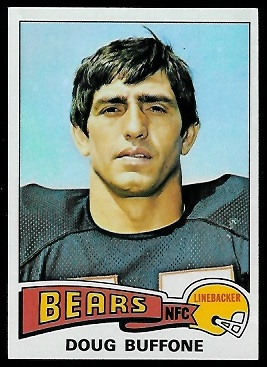
The late Doug Buffone and Ed O’Bradovich hosted the Bears postgame show on WSCR in Chicago. The two ex-Bears sounded like “Chicaaaaaaaaaaaaago.” Thanks to WSCR’s powerful 50,000 watt signal, they had a loyal following across the midwest. People wanted to hear what two neighborhood guys had to say about the Bears game. They had value because they were the local guys.
When Buffone died in April, seemingly everyone went out of their way to mention that his postgame show on The Score was a must-listen. According to the logic of “big time radio,” they should never have jobs. They weren’t members of the ’85 Bears. They didn’t have high quality radio voices. They stumbled in and out of sentences. But their passion more than made up for their lack of broadcast polish, and Chicago responded. They also rang the cash register for WSCR.
Local radio makes money. The five highest grossing radio stations in Chicago are all stations that wouldn’t exist anywhere else:
WBBM-AM, A live and local 24/7 news source, home of the Chicago Bears and Cubs.
WTMX-FM, a live and local music radio station that is home to the extremely popular (and local) Eric and Kathy morning show.
WGN-AM, a live and local 24/7 news and talk station, home to the Chicago Blackhawks.
WBBM-FM, a live and local contemporary hit music station with 33 years of history in Chicago.
WSCR-AM, a live and local sports talk station that devotes its entire broadcast day to Chicago sports, home of the Chicago White Sox.
Finally, there’s nothing wrong with a little local pride. Every city or region has its issues, but by and large we’re happy to live where we live, and we want our media outlets to share that passion.
Here’s an example from Milwaukee. For years, WKTI-FM was an extremely successful pop music station. For 25 years, it was anchored by a morning show hosted by Bob Reitman and Gene Mueller, two guys who absolutely bled Milwaukee and Wisconsin. The neighborhood feel of their show allowed them to defeat all challengers, especially during the mid 1980’s, when the success of MTV pushed a number of FM stations into the Top 40 game. Thanks to Reitman and Mueller, WKTI became integrated into the fabric of life in Milwaukee and southeast Wisconsin. It was such a powerful brand that the WKTI call letters and logo were recently restored on 94.5 FM.
It sounds like Radio 101, but if you love your listeners, they will love you back. But like any relationship, serving your audience is hard work.
 Rob Hart Media