
People love talking about themselves…especially when they are on the radio.
Bless me, Father…for I have sinned.
I’m here to make a confession, and to apologize. You see, I wasted your time. It might have been four years ago, back when I was the host of a weekend show on WGN. Or it might have been three years ago on The Loop. Or it might have been two years ago on WTMJ. Whenever it was, you gave me several minutes of your valuable time and I used it to gas on and on about myself.
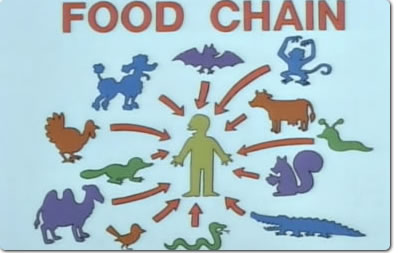
It’s kind of like this.
You have important things to do in your life. You have a job. You have a home. You have kids. You have a strict family schedule. The last thing you need is some goof acting as if those things don’t exist.
The best talk shows are the ones that exist inside the life of the listener. As broadcasters, it’s our job to find out what’s important in our listeners’ lives and to address them.
Are people interested in the finale to “Mad Men?” Do a segment on that.
Was a mother kicked off an airplane for breastfeeding their child? You better believe you should do a segment on that. Everyone has an opinion on the appropriateness of public breastfeeding, which means everyone will feel like they can be part of the conversation.
“But this is lame! Why can’t I talk about what’s interesting to me!”
Because your job is to be interesting to other people, and your interests aren’t universal.
“But I was listening to a show and the guys say they just hang out and say what’s interesting to them!”
Those people are lying to you. “We’re just a bunch of dudes who hang out and try to entertain ourselves” is marketing. The truth is, any successful radio show is the product of hours of work: figuring out what’s interesting to the audience, booking guests, brainstorming segments, making sure everything has a payoff and a listener benefit.
Yet far too often, I hear shows that act as if being unprepared is a feature, not a bug. “Seinfeld” may have been a show about nothing, yet for every “Seinfeld,” there was an “It’s Like, You Know.” An observational comedy without the observation. Besides, the genius of “Seinfeld” was wrapped up in the genius of Jerry Seinfeld, Larry David, and a team of extremely talented writers. “Seinfeld” worked because the situations that befell the cast were universal.
A radio show about nothing only works if it it hosted by an extremely talented storyteller. In the wrong hands, it sounds like this:
HOST: (reading printout of story handed to him/her by the producer) I’m gonna fumble around with this until I find a funny line.
SIDEKICK #1: I’m going to listen until I find my funny line.
SIDEKICK #2: I’m also going to listen until I find my funny line.
The funny lines eventually appear – after 10 to 15 minutes of circular conversation. By that time, the audience is long gone. How often do you stick with a “Saturday Night Live” sketch before you change the channel or skip ahead? 45 seconds? One minute? If I had the chance to do it all over again, I would have applied my attention span for other media to my own show.
And the truth is, we have enough “me” in our lives. When we wake up in the morning, the first thing we do is reach for our phones and check Facebook. Social Media is nothing but “me.” Endless posts from friends, family, co-workers, ex co-workers, high school crushes, and everyone in between bragging about everything: their job, their spouse, their kids, their vacation, their date night, their new car. We hate the humble braggers on Facebook.
Again, I know that I committed all of these sins and more. In a Facebook feed full of braggarts and cranks, what stands out? Facts. Trivia. Intellectual stimulation. Something relevant that can be applied to your own life.
There’s a big market for “explainer” journalism. Bloggers who have a passion for an arcane subject, who are able to explain that subject in simple terms have been able to write their own ticket in the media world. Nate Silver was a baseball geek with a knack for numbers, until he applied those analytical skills to political polling. The end result? Five Thirty Eight, a website that is now a must-read during election season. Ezra Klein was able to demystify politics of Health Care Reform, and as a result was able to walk away from the Washington Post. Why not take that approach to radio.
“You’ve heard about this…now let me tell you what it’s all about….”
The listener learns something. And then they tell ten friends “you’ll never guess what I heard on the radio today….”
Radio stations test music by running something known as “auditorium tests.” They get a focus group in a large room and then play five seconds of a song. In those five seconds, you are supposed to figure out what that song is and decide whether you are going to stick with that song through the end. Why five seconds? Because when we’re punching around that’s how long we give a station before moving on to the next thing.
The same principle applies to news/talk. Four years ago, when I was first getting my feet wet in talk radio, I would think what I was doing was interesting because I was the guy on the radio. It’s interesting, there for it is. I should have examined my approach to every topic like an auditorium test.
“Is someone going to punch the button after 30 seconds?”
 Rob Hart Media