
Who wants to be the first one out of the trench?
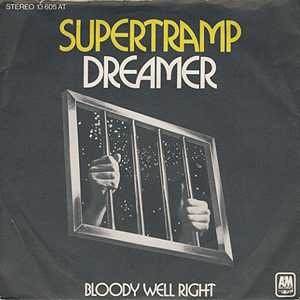
This song is now in your head.
We live in the age of the “thinkpiece,” and the Model-T of the thinkpiece economy is the essay on innovation. Thought leaders urge us to disrupt the status quo, think differently, and to upset prevailing ideas. We should do that. It appeals to the sector of our brain that’s wired to respond to romantic notions. We lionize those who actually did it.
When Apple co-founder Steve Jobs died, his memory was discussed as if he was a combination of Jesus Christ, Santa Claus, and Willy Wonka. In reality, Steve Jobs was a sociopath who happened to have a knack for making things simple. Sure the Apple II, the Macintosh, and the iPod/iPhone/iPad were world changing technologies…he had plenty of failures as well. The Mac was followed by Lisa (named after the child whose paternity he denied – they later reconciled) and NExT. Jobs, and Apple were jokes when he re-joined the company in 1997 after a 12 year absence. Jobs then developed numerous iProducts and died a hero in 2011.
But for every Steve Jobs, there are hundreds of others who follow that same spirit of innovation and fall down one rabbit hole after another. The greatest example of this dichotomy, believe it or not, comes from the movie Ed Wood.
Ed Wood is about the 1950’s movie director who made some cheesy sci-fi and horror movies that lived forever as late night programming on independent TV stations from coast to coast. But Ed Wood thought he was Orson Welles, and he was certain that Plan Nine from Outer Space was Citizen Kane. In this scene, Ed talks to his idol and discovers they have the same problems:
The line between genius and crackpot ends at Citizen Kane. Not only are the odds of success astronomical, there’s a real disincentive to thinking outside of the box. As Nick Naylor said in the movie “Thank You for Smoking,” “I need to pay the mortgage” is the “yuppie Nuremberg defense.” The 21st century way of saying “I was just following orders.” Better to go along, get along, collect check, and enjoy a life of least resistance. It ain’t bad. You can spend time with your family untroubled by drama at work. May we all be so lucky.
There’s one constant in spectrum of radio opinion, and that is the idea that people need to shake things up. Here’s the problem – unless it’s an immediate, out of the box success, any attempt at innovation will be judged harshly by the marketplace and the industry. Your peers will secretly hope you fail.
Want to introduce new music that is unfamiliar to the audience? Here’s the Media Monitors report showing the mass tuneout that took place when the song hit the air.
Want to hire some high priced local talent? Watch how the ratings don’t justify the expense.
Want to take a chance on eager young talent? Watch how the audience takes forever and a day to get used to unfamiliar names.
Want to hire a morning talent who will step on the toes of propriety? Get buried by an avalanche of listener and staff complaints.
The downside to innovation is accountability, and in that environment groundbreaking ideas have a tendency to fall into a pit.
Then how does innovation happen? Intelligently.
Steve Jobs was a terrible human being, but he also believed in turning complex machines 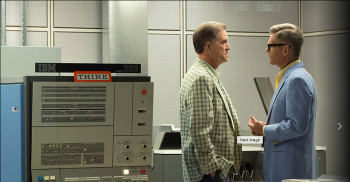 into user friendly tools. The computer that was installed at Sterling Cooper and Partners in 1969 (in reality, Season 7 of “Mad Men”) was a scary machine that ate punch cards by the ton. The personal computer race had been underway since the 1960’s. The first PC was developed in Italy, but the Apple II was one of the first successful mass market personal computer when it hit the stores in the summer of 1977. Seven years later, Apple introduced the simple Graphical User Interface when it rolled out the Macintosh (an idea that may or may not have been lifted from Xerox). The same push for simplicity guided the development of the iProducts in the 2000’s. Jobs may have been a megalomaniac, but he had a clear organizing principle: keep it simple.
Another lesson: Don’t go it alone. Get the support of a powerful friend.
Thanks to the movie Private Parts, there is no one aspect of the business operations of the NBC owned-and-operated radio stations that is better known than the three years in which Howard Stern was in the employ of WNBC-AM in New York City. For the sake of entertainment, the movie streamlined the story in a big way. The evil program director who hectored Howard was a composite character, but Paul Giamatti looked kind of like the late Kevin Metheny, and as a result the “Pig Vomit” nickname followed him for the rest of his life.
The truth is a little more complex. Howard did have a champion at NBC, and that helped him as he flew in the face of a very conservative corporate culture. Warren Littlefield once said the NBC programming philosophy in the early 80’s was a simple one – “least objectionable” and “the big event.” A TV show or radio program was a success in the network’s eyes if it didn’t generate any complaints from the public. So yes, Kevin did give Howard grief when he first arrived at ‘NBC in August of 1982. In early 1983, Kevin had a new boss, Randall Bongarten. Randy liked Howard Stern, and gave him plenty of room to develop his act. He even appeared in a TV commercial for the show:
With Bongarten’s blessing, Howard Stern lived a happy life at WNBC. He even got along with Metheny, before he left to take a programming job at MTV in February of 1984. Howard left NBC in the fall of 1985 after a listener complained at an RCA shareholders meeting. By that time, Howard’s star was bigger than the station, and he was well on his way to becoming the most influential broadcaster of his generation.
Another lesson: show your work.
Research is an invaluable tool. Outside of the box thinking is easier to swallow if there’s a pile of numbers that suggest it’s a good idea. That pile of numbers is the reason why you came up with the idea in the first place.
Example? On demand media.
When I was a freshman at Marquette, nearly all of the students in the broadcasting program wanted to be on TV. Everyone had their eyes on being the next Katie Couric, Matt Lauer, or Stuart Scott. There were a handful of kids who wanted to try their hand in radio. An even smaller number of misfits were interested in pursuing what was then known as “new media.”
“You can’t make money off of the internet!”
Well, now all of the radio and TV wannabes who are still in the business are in the internet business if they want it or not. The generation of media consumers who are currently in school – the people who will determine our fates ten years from now – consume media on their time. 17 years ago, we all aspired to be anchors of the 5, the 6, and the 10. Now that we’re approaching middle age, we have come to realize that expecting someone to sit down and watch TV at an appointed time is almost too much to ask.
Given the volume of information available about the audience’s thirst for on demand content, it’s not crazy to suggest that maybe, perhaps, broadcasters should start re-ordering their programming to meet that need. Not all at once, of course, but gradual enough that they are in the right place when the tide shifts.
Innovation is a lot like climbing Mt. Everest. During your ascent, you are haunted by the sun-bleached corpses of those who didn’t make it. But if you pack the right gear and choose the right guides, it can be done.
 Rob Hart Media