
Addressing some age old complaints about the state of our stations.
I was interested in seeing the reactions to Steve Johnson’s takedown of Chicago radio in Friday’s Chicago Tribune.
But I can’t find one (radio station) that’s widely available and ventures outside of the tightly programmed, not-so-distinct-sounding formats that its corporate overlords have decreed from the home office somewhere in not-Chicago. Indeed, I like to lump all those formats together into one uber format I’ll call “obvious music,” the songs you’ve heard before and expect to hear again from yesterday, today and, soon enough, tomorrow.
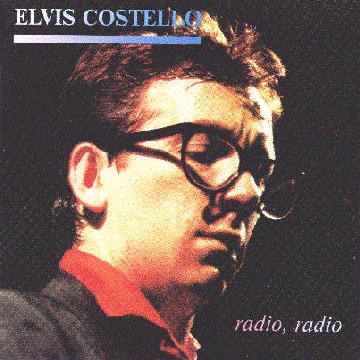
WXRT is playing this right now.
Johnson also freely admits that his cultural biases exist at the intersection of Belmont and Broadway on the near north side of Chicago. His music can be found at the clubs and cultural venues frequented by the gritty individuals who reside in Lakeview and Lincoln Park.
The column seemed to strike a chord with readers. Media writer Robert Feder posted a link on his Facebook page. Johnson’s column has so far generated 75 comments. Feder’s posting generated another 70 comments. Since everyone listens to the radio every now and then, everyone has an opinion on the listening options available to them.
The comments can be broken down into the following categories.
1- Radio is too middlebrow for my high functioning intellect. How come we don’t hear 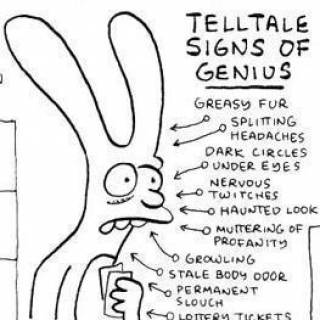 more jazz, folk, Gregorian chanting, whale song, etc.
2- How come radio stations don’t program their music to fit my exact tastes?
Both of these complaints say more about the person doing the complaining.
3- How come radio stations aren’t as good as they were when I was (age that represents youth and innocence)?
The comic Tom the Dancing Bug tackled this very phenomenon:

You’ll find that the age that represents the “good old days of Chicago radio” is the same age that represents the “good old days of Saturday Night Live,” “the good old days of The Tonight Show,” and so on.
Even though I was born in 1980, in my mind the years 1976-1995 represent the “golden years of Chicago radio.” Great stations, great personalities, great stories. Which is why I was delighted to find Gary Deeb’s blistering takedown of Chicago radio from 1979. Smack dab in the middle of the Golden Era, when Larry Lujack, Wally Phillips, Steve Dahl, Fred Winston, Bob Collins, and Roy Leonard ruled the roost.
Besides WMAQ, other robot stations in Chicago include WLOO-FM, where the “beautiful music” never is identified or commented on; WEFM, a teen-rock bubble machine featuring yammering deejays who say nothing; WKQX-FM, an automated rocker that often sounds freeze-dried; WLAK-FM and WAIT, two more “beautiful music” purveyors; WDAI-FM, WBMX-FM, and WGCI-FM. a trio of disco-oriented stations; WBBM-FM, WLIP- FM, and WMET-FM. three more rockers with virtually no personality; and WCLR-FM, a pleasant sta- tion that plays bright, “middle-of-the-road” music but refuses to take the gags off its announcers.
Imagine if a time traveler went back to 1979 and told Deeb that he was criticizing something that would be later considered the Grand Old Days of broadcasting.
4- I have discovered that an alternative audio entertainment source is better than terrestrial broadcast radio.
This should scare the hell out of our industry because there is a generation for whom the radio doesn’t exist. Audio entertainment exists. But the AM/FM radio is a non entity. When I was a student at Marquette, the last weekend in August represented move-in weekend, when everyone would furnish their brand new dorm rooms. The three main dorm room items were clothes, TV and associated video entertainment options (VHS tapes, DVDs, games), a giant stereo system and several crates worth of CDs.
If I were to return to Marquette during move-in weekend, I would still see the clothes. I’ll see the TV and maybe a gaming system (the DVDs have been replaced by a Roku or Apple TV box. The VHS tapes are at the Museum of Broadcast Communications). The AM/FM stereo and crates of CDs have been replaced by an iPhone.
The last 20 years of radio will be known as The Age of Consolidation. Economic factors forced many small mom-and-pop broadcasters to sell their lifelong investment (at a hefty profit) to the Clear Channels and Infinitys of the world. But thanks to the shift in advertising dollars from broadcast and print to digital, that era is coming to an end. This is an age of disruption. If traditional broadcast radio is to stay relevant in the next 20 years, it will require a top-to-bottom reappraisal of what works and what doesn’t.
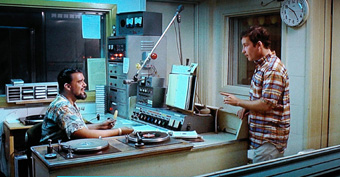 Which is why the announcement that Apple is going to hire live DJs as part of its Apple Music product is so intriguing. The role of air personality has been frozen in time since the days of Wolfman Jack. The jock is high energy, promoting contests, station business, and maybe a one-liner or two over the intro to a song.
Apple touted the jocks as the human element in a world where music selection is driven by algorithm. Instead of some equation telling you what songs you like, here is a human being selecting the music. You either trust his or her judgement or you don’t. Maybe the music radio disc jockey of the 21st century will be more news anchor than entertainer. They will succeed or fail on their credibility as music experts. The jock of the future will be a friend first and foremost, followed by a music expert, and maybe entertainer. It’s a futuristic spin on good old fashioned broadcasting fundamentals.
Music selection is too reliant on research. I understand why this is the case. There is more ratings data available to programmers than ever, and every second of the broadcast day is subject to multiple angles of scrutiny. Music research, when utilized properly, is a tremendous tool. A focus group is brought into an auditorium or conference room and asked to rank songs…based on hearing them for 3-5 seconds.
That’s too short!
Not exactly. That’s how much time we give a music station when we’re punching around in the car. The results are then scored on a scale of 1-100. Those that get over a 90 get on the air. Even so, that should allow for one or two “oh, wow!” songs per hour.
Here’s what happens. Ratings are delivered on a weekly basis. When a station’s ratings go down week over week, a program director’s superiors will want to know why. In order to find an answer, they will go into the Media Monitors report for that particular week. Media Monitors shows how many Portable People Meters are tuned to a given station at a given time. When a panelist changes the station, the Media Monitors report will tell you where they went. When I filled in on WLS, I would see who came in from WSCR, and who punched out to US99 or WIND (It stung a little to see people punch out).
Which means if a programmer inserts a few “oh, wow!” songs into the playlist, and then the ratings go down, those songs are gone regardless. Unfamiliar songs were added to the playlist, the ratings went down, ergo it’s the fault of the unfamiliar songs. It doesn’t matter if the true source of the ratings drop was a PPM panelist going on vacation.
If the ratings go down, and the answer is “the music, the production, and the air personalities adhered to well-researched broadcast principles,” then the ratings drop will be attributed to statistical noise.
Or they will tell the jocks to shut up. Programmers have been telling DJs to shut up since 1959.
Eventually, the big companies will be forced to sell stations en masse in order to pay off their substantial debt. That’s when the fun begins. As Randy Michaels once said, broadcast ownership is unlike any other business. You can zero out the value of any business, he said, except for a radio station. The license will always have value. In major markets like Chicago, an FM station broadcast license is still worth many millions of dollars.
In the future, radio stations might just become brand extensions for companies that aren’t traditional broadcasters. Imagine what Lightbank, backers of Groupon could do if it got its hands on a radio station. Several months ago, Allstate operated a low power FM station near a billboard at Diversey and Western on the north side. The station could only be heard for a few blocks. It ran music and automated announcements from Dean Winters, the actor who played “mayhem” in the Allstate TV commercials.
The most innovative radio station on the Chicago FM dial is nothing more than an 24/7 advertisement for Me-TV, the nostalgia TV network that originates in Chicago and is seen around the country. 87.7 Me-TV FM airs music from the same era as its stable of TV reruns. The playlist is thousands of songs deep, and the station airs hundreds of songs that would fail an auditorium research test. But that doesn’t matter. It exists to funnel people into the TV station.
“Alibis,” a 1984 hit from Sergio Mendes is in heavy rotation:
That very well could be the future of broadcast radio. Allstate, Kohl’s, Walgreens and other big employers could own and operate radio stations as brand enhancement. And if they hire a couple of broadcasters to tinker with the programming…you could see some real innovation.
 Rob Hart Media
There’s an intersection of Belmont and Diversey?
LikeLike
There will be when I’m in charge! South side geography strikes again.
LikeLike