
If radio wants us to “live in the moment,” then why does it punt on so many moments?
What if I told you that there was a way for a radio station to enhance its standing in the market, and the total cost was $200,000 per year.
Now don’t blanche if you are on the business side of things, chances are you’ve already thought about shelling out $15,000 to buy a Voltair unit to boost the PPM code embedded in your air signal.
What will this $200,000 buy you?
A late night personality
An overnight personality
Weekend part-timers.
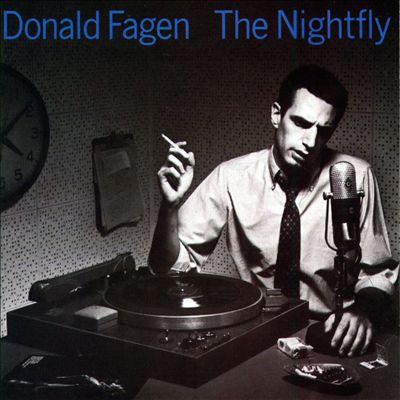
He has plenty of java and Chesterfield Kings.
At this point, I might as well grow a bushy mustache and wear aviator shades because anyone who suggests live and local staffing in late nights, overnights, and weekends, (especially at an FM music station) is as hopelessly out of date as Dr. Johnny Fever from WKRP In Cincinnati.
The Chicago Blackhawks clinched their third Stanley Cup in six years shortly before 10:00 on Monday night. The TV stations were ready to roll with extended versions of their late news. The newspapers were constantly updating their websites with the freshest material from the United Center, and from various points of celebration around the city. WGN, as the flagship station, had postgame coverage that ran into the morning. WSCR and WMVP were on the air with local postgame shows. WBBM broke out of the news wheel to bounce back and forth between news conferences and the team of news and sports reporters in the field.
But – I can guarantee that some music stations had the lights off, with the main on-air computer safely stashed behind a locked door. All that remained was for some programming assistant to VPN into the programming software to insert the “Congrats to the Blackhawks for winning the Stanley Cup” voice track.
Seriously, this happens. It’s like the famous SNL sketch where Dana Carvey portrayed Tom Brokaw:
The Blackhawks won the Stanley Cup
The Blackhawks will play in Game 7
The Blackhawks were eaten by wolves….
Broadcast radio is in the fight of its life against digital, on demand competition. The one advantage it has over iPods, Pandora, Spotify, etc. is the ability to throw itself into a big local story. Last night, it was served on a tee. A live human being in the studio represented the opportunity to create memorable moments.
Take unscreened phone calls. Want a “driveway moment?” Stay tuned to see how quickly the jock can hit the dump button.
Send a producer or intern to Wrigleyville. Follow their progress throughout the night.
Have a live overnight guy/gal? Have a producer or intern follow the Blackhawks as they take their drunken victory lap through Chicago. When the Blackhawks won the Cup in 2010, I was a street reporter for WGN. The charter flight from Philadelphia landed at O’Hare at 3:30 the next morning. After a few words to reporters, the team was off on a chauferred round of early morning drinking. It started at Harry Caray’s in Rosemont and continued to The Pony on Belmont. Every 15 minutes I would call Greg Jarrett with a status report. There were plenty of memorable moments. Among them, the Stanley Cup being limoed away from The Pony. Kris Versteeg fell out the front door of The Pony before being rescued by a bouncer and shoved into a limo at the back door.
Those moments belonged to any station willing to make the investment.
I already know the response – “nobody listens overnight/nobody cares about radio enough to worry if the overnight jock is covering the Hawks/this won’t move the needle.” On the other hand, programmers are always talking about “viral moments.” Well, you can’t have a viral moment without people to make it happen. Instead, they happened to my bud Marcus Leshock at WGN-TV:
It even made Deadspin. A radio programmer who is able to get that kind of publicity immediately gets promoted.
In a vacuum, covering the Blackhawks victory celebration won’t move the needle. A station won’t see a PPM bump. But – it has a cumulative effect.
The lifelong Blackhawks fan who got to see his/her favorite team win The Cup before going to work overnight at O’Hare. While fueling the planes for the next morning, the radio is passing along frequent updates about the whereabouts of the Stanley Cup party in between the tunes. This overnight worker feels like part of a larger group. Speaking as a White Sox fan who can remember every little detail about the night the Sox won the World Series in 2005, I can tell you that the radio station will be a part of this person’s lifelong memories.
“The night The Hawks won The Cup in 2015, I had to work the night shift at O’Hare. The DJ on the radio spent the night following the Hawks through town. I’ll never forget it.”
This person will tell all of their friends. It is word of mouth marketing that is more successful than a national contest (that you can’t win) by several orders of magnitude.
Eliminating late night and overnight staffing from radio stations hurts the brand overall.
Take my former station, WGN.
WGN Radio is one of a handful of AM stations that has been able to defy gravity in 2015. The reason is very simple. In the 1970’s management made a commitment to local programming and their successors have yet to waver from that philosophy (the only exception being when the Tribune bankruptcy trustees forced taped “best of” programming on weekends in 2012 and 2013).
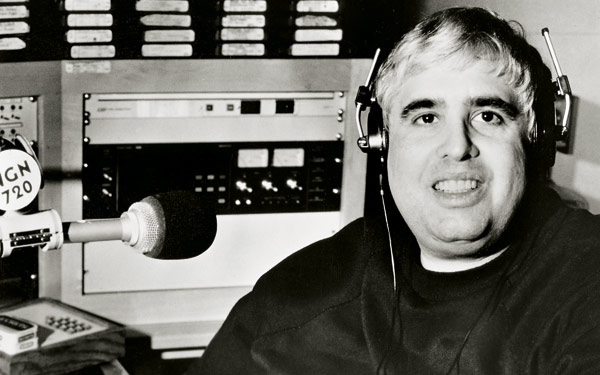
Chicago’s in tune with Chicago Ed….
That commitment to live and local programming around the clock introduced the midwest to Eddie Schwartz. “Chicago Ed,” as he was called, was a morbidly overweight radio geek with a high voice who was able to talk his way onto the air through sheer persistence. He landed a gig at the old WIND in the mid 1970’s and quickly developed an extraordinarily loyal following of overnight listeners. His big heart more than made up for his lack of broadcast polish, and as a result he was a friend to thousands of people who were up in the middle of the night.
In 1982, WIND decided to air Larry King’s syndicated talk show. Chicago Ed quickly found himself at WGN, where he would stay through 1992. Did Eddie Schwartz generate the kind of revenue for WGN as Bob Collins, Wally Phillips, or Roy Leonard? No. But his value to the station was priceless. His presence on overnights proved to listeners that WGN truly was a resource that was available to you around the clock.
Three years after replacing Eddie Schwartz with Larry King, WIND was sold to spanish language broadcasters. Schwartz left WGN for WLUP in 1992. He died in 2009. His successors in the overnight shift at WGN – Steve and Johnnie, Bill Leff, and Nick DiGilio have done a tremendous job of upholding his legacy. WGN is still live and local through the night, and it’s still telling people that they are there when you need them.
Where do you draw the line? One of the many reasons why talk radio is in trouble is that big companies have forced stations to punt on numerous dayparts.
“No one listens overnight” becomes “no one listens late at night” becomes “who listens in the early evening” becomes “the only local show anyone listens to is the morning show” becomes “what the f–k happened to our ratings?!”
The same thing goes for weekend programming. A blizzard hit Chicago on Super Bowl Sunday. Nearly all stations were in the can. It would have been a perfect day to break format, take phone calls, and to remind people that we’re all in this together.
Any mathematical formula can spit out songs. The field of streaming, on demand music grows larger by the day. A traditional broadcaster has one thing that Pandora and Spotify do not: HUMAN BEINGS.
Use them well…and we may be able to outlive the hangman.
 Rob Hart Media
I couldn’t agree more Rob.
I love live local radio and I hate canned, distant, syndicated radio.
Once a station empties its studio, I’m gone and maybe I’ll return and maybe I won’t.
Live beacons like WGN keep me coming back over and over again.
Penny wise and pound foolish programmers are killing a vital, immediate medium.
LikeLike