
Or, what happens when decisions are driven by self loathing.
My first professional job at an actual, honest-to-God radio station was WTMJ in Milwaukee. My first day on the air was April 22, 2000.
At 10:30 PM.
Not that I was counting or anything. Either way, I was six weeks shy of my 20th birthday and I was an actual guy talking on the actual radio. I worked Saturday nights until Midnight. I was a sophomore/junior at Marquette and off-campus parties still had several more hours of life left in them. I thought I had an advantage because I was walking into a social situation with an interesting story.
“Did you just get here?”
“Why, yes…” (said with a certain cockiness reserved for astronauts who had walked on distant planets) “I was on the radio.”
“Are you a DJ?”
“No, I was doing newscasts during the Best of Clark Howard.”
*blank stare*
“You know, the consumer guy out of Atlanta”
“I’m going to go over there. You don’t have to join me.”
Years later, when I was considered a part of the WTMJ “family,” I still got blank stares when I told people who I was and what I did. My favorite instance was talking to a person who was a die hard fan of “Wisconsin’s Morning News.” She loved Jon Belmont, she loved John Jagler, she enjoyed Dan Kyle, she couldn’t get to work without Tom Carr’s traffic reports, she loved the business guys from Robert W. Baird, she even loved the producer Bryan Ramsey.
She basically named everyone on the show except me. It was like going in for a high five and missing the other person’s hand entirely (speaking as a white male, this happens often).
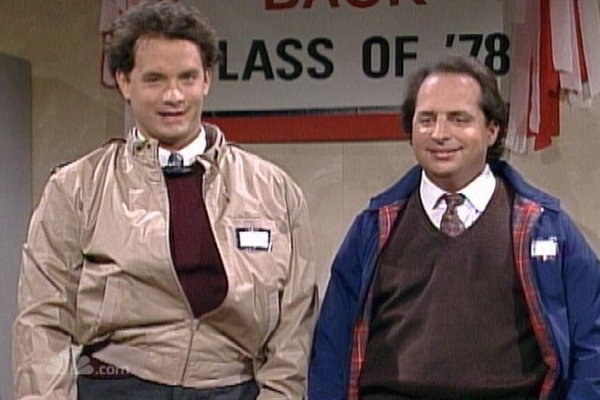
How we view ourselves.
Everyone who has ever slaved over a hot microphone has a variation on those stories. You find out very early on that you should not get into the radio business if you want instant recognition and fame. Instead you’re left with the satisfaction that comes with creativity and the pride that comes with knowing that you are contributing to a medium with a rich and colorful history.
But the stories of pulling a muscle while patting oneself on the back lead to a collective self loathing from radio people about how their industry is perceived. I used to say this myself.
“Radio is the last refuge for attention seeking people who don’t look good and can’t sing.”
Yeah, we say these things to sound humble and to keep our egos from spiraling out of control. But gradually that perception seeps into how we make decisions about the future of our industry.
We don’t view ourselves as entertainers or sources of relevant information. Which is why decisions that reduce the quality of the product are met with “nobody cares!”
“Nobody cares if a human being isn’t available to answer the request line.”
This is cheap and easy brand management. The one thing I learned at The Loop above all else is that PEOPLE CALL THE REQUEST LINES ALL THE TIME. Did you miss the daily airing of “Fool in the Rain?” Play it again because I’m in the mood for some Zep! Some of the requests were easy to fulfill (anything by Journey). Some of the requests were pretentious (text requests for the live version of a solo track by a core artist). And some requests had a deep back story (the woman who requested “Turbo Lover” from Judas Priest in memory of her late husband. I still want to track her down to learn the significance of that song to her marriage).
Thanks to technology, radio stations have been on autopilot for at least two decades. Even so, the general public still believes there is a DJ in the studio picking the tunes and taking your requests. Let them know that their mental picture is correct. There is a person on the other end of the phone. Even if the request is totally off base, or completely incompatible with the station’s format – it is an opportunity to mine some humanity from the audience. And once again, humanity will separate traditional radio from the automated online music services that are eating away at music radio.
Of course, we know the real answer. The phone lines are busied out, and the people who want to establish a relationship with the radio station that is a part of their lives for several hours out of the day are given the cold shoulder.
“Welp, the radio station doesn’t care what I have to say so I guess I’ll move on to something else.”
And we’re OK with this because we have conditioned ourselves to believe that no one cares anyway.
It’s a vicious cycle:
1- Broadcasters rationalize cutting back on the on-air product because we assume the listeners don’t really care about what we do.
2- Listeners notice the dropoff in quality and stop caring about radio.
People want to be entertained…or informed…or have their mind engaged on some meaningful level. More importantly, they want to devote their time and energy to entertainers who devoted the time and energy to their product.
Even if they aren’t wowed at parties or overly impressed at the bar, people do care. There’s a demand for what we do, even if the technology changes over the years.
In the 80’s, WXYZ-TV in Detroit told its viewers to “Stand Up and Tell ’em You’re from Detroit!”
Like the Motor City, the radio business has taken its lumps over the past couple of years. But it doesn’t diminish the work of great broadcasters who got into this business because they caught the bug a long time ago.
So…stand up and tell ’em you’re in radio!
 Rob Hart Media