
The vicious cycle of new talent.
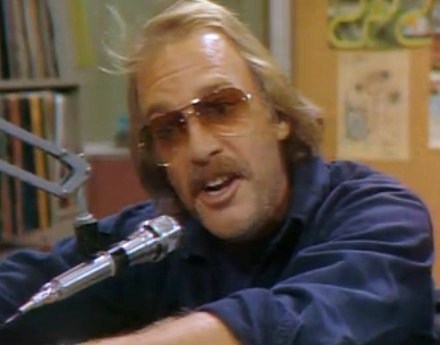
No more “town to town, up and down the dial.”
One question that was raised about my post about the current state of talk radio was about the lack of a “farm team” in radio. In the 1970’s, 80’s and 90’s, the road to major market (or national) success ran through the small towns of America. Upon graduating from college you packed up the car and drove to Escanaba, Mason City, Fargo, or Texarkana to start your career. For little or no pay, you learned your craft without the pressure of trying to attract a large number of people. From there, you gradually worked your way up from towns to cities and then to Major Metropolitan Areas.
That changed in the 1990’s when technology and consolidation of ownership wiped out many of the jobs that attracted beginners. And now, the argument goes, radio is paying the price in the form of a talent drought. The industry continues to pay “stars” long past their sell-by date because the younger performers who could replace them no longer exist.
The real story is a little more complicated. There are many routes to a radio station in a major market (such as Chicago), and even then, success is not guaranteed.
My journey in radio was not typical. My first paid radio job was in Milwaukee. WTMJ was the number one station in town. In decades past, a broadcaster would spend a decade bouncing around Wisconsin before landing at a station like WTMJ.
I didn’t get the gig because of overwhelming talent. I got it because I was willing to work the strange hours. Radio was a hobby to me, so I had no problem with hanging around the station for no good reason whatsoever.
I also had the good fortune to work with people who were tremendous role models. Robb Edwards, Jon Belmont, Gene Mueller, John Jagler, Mark Reardon, Cheri Preston, and Dan Shelley had experienced a great deal of success in radio. I emulated their attitude and work ethic. I would argue that for a young broadcaster, your co-workers are more important than the size of the market.
I knew people who bounced out of the business for no other reason than they got bad advice from the wrong people. At any radio station, there are people who are simply pissed off. They maintain a list of their grudges and pass along their grievances as “advice.” Beginning broadcasters, believing that’s the way to behave in a professional setting, step on land mines of their own placement.
If you’re in college and considering a career in radio, be sure to vet your role models. If they have a story about telling off the boss just after quitting/getting fired – you should proceed with caution. If they have two or more, run away.
You should also have a backup plan. There is a point in your career where you will wonder if it’s worth it. Even during the so-called glory days of the 1970’s radio was a profession that had strange hours and low pay. If it no longer makes happy…leave. Pursue another passion in life. One creature common to radio stations is the broadcaster who hates his or her job but is afraid to do anything else. If affects the on-air product and it blocks the path of someone who really does love what they do.
Even if you do everything the right way, there’s still no guarantee that you’ll get a gig as a major market personality. Look at the economic pressures facing radio stations today:
– Smaller pool of available ad dollars because of digital and online spending
– Laser-like focus of parent company on goosing the stock price by any means necessary. The relentless need to cut expenses means local programmers can’t develop talent.
Which is why the ranks of talk radio hosts are choked with names from the past, names from other industries, or people with a “narrative.”
“Competent broadcaster who has spent years developing a good show” doesn’t work from a PR standpoint, especially when compared to “longtime radio star” or “ex-politician” or “newspaper columnist” or “celebrity TV pundit.”
Two years ago, Mike Huckabee was touted as a syndicated alternative to Rush Limbaugh. He promised to be a kinder, gentler conservative talk show host. For a very short while, it worked. The press release announcing Mike Huckabee’s national talk show did get the industry talking. Some even touted a non-existent “war” between Rush and Huck.
Then Huckabee realized that a daily talk show was hard work and quit. After years of being on the Arkansas state payroll, Huckabee was cashing in, and the grind of a daily radio show got in the way of other, more lucrative opportunities.
It goes beyond news/talk radio. Remember when David Lee Roth replaced Howard Stern? Remember Whoopi Goldberg, morning show host? The audience didn’t buy it, and the performers realized there were easier ways to make a buck.
And when the celebrity quits? He or she is replaced by a TV anchor. The TV anchor is replaced by an ex-jock. The ex-jock is then replaced by a lawyer. The lawyer is replaced by a newspaper columnist.
Begin again.
Due to the economic pressures facing radio, the big name trumps the good broadcaster. As one former colleague put it, “radio is all about winning the press release.” The news story announcing the hire is all that matters. It just needs to turn heads in the trades. It doesn’t matter if the show is good or even attracts an audience. Get rid of the host and then write up another eye-popping press release.
The boss is accountable to another boss, and it’s much easier to say “Don’t worry about (daypart), I’ve got a local celebrity lined up.
When that local celebrity quits 18 months later, the manager can tell the boss “don’t worry about (daypart), I’ve got a local celebrity lined up…”
It’s an economic model that brings diminishing returns, but pending a seismic shift in radio ownership or a massive technological disruption, that’s the way it is for now.
The good news is that the talent pipeline flows into the on-demand arena. It is a world without limits – and there have been some incredible success stories:
Marc Maron is interviewing President Obama
“Serial” is a breakout hit.
Have you heard of “Mommy’s Cocktail Hour?” It’s four moms who make a different cocktail and then talk about being a mom. Think of it as a millenial “Kathy and Judy.”
Does this mean podcasting is a way to make enough money to support a family? No. A podcast, like a blog, is something you do after your 9-5 job. Like blogging, there are superstars and there are people who toil in obscurity forever. But, it can be a fun creative outlet.
EVENTUALLY……..
Some enterprising broadcaster is going to see all of the exciting stuff going on in the podcast arena and ask them to do their work in a studio that’s attached to a transmitter.
Once again, the talent pipeline will flow in the right direction.
 Rob Hart Media