
You may not agree with anything he says, but you can’t dispute that Donald Trump can draw an audience.
This has been the Summer of Trump.
I don’t have to use his first name.
I don’t have to tell you that he’s a billionaire.
Donald Trump is a human being. Donald Trump is a businessman. Donald Trump is a 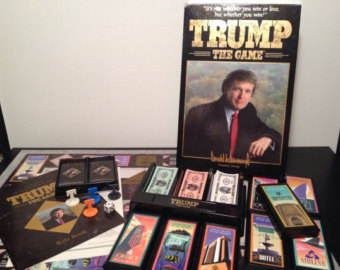 brand. Donald Trump is a board game. Donald Trump is also very good at getting people to talk about Donald Trump.
And that leads us to Thursday night in Cleveland. The first debate of the GOP primary season attracted 24 million viewers. It was the highest rated program in the 20 year history of the Fox News Channel by a country mile. Nothing came close. Something tells me that the audience wasn’t watching to see Jeb Bush, Scott Walker, or Ben Carson. They wanted to see Trump. They wanted to hear what he was going to say next.
Trump is now the frontrunner in the Republican race for president, and he arrived at this point by being the anti-candidate. He said Mexican immigrants were criminals, he mocked John McCain’s years as a POW in Vietnam. For any other candidate, those two comments would have been career killers. For some reason, it made Trump even more popular.
He says whatever pops into his head….or it appears that he says whatever pops into his head. Most “undisciplined” media personalities lead a very short life. Trump knows how to be unpredictable, and in the correct proportions.
Who’s winning? Fox News Channel, for one. The eye-popping debate audience. Even when Trump isn’t a guest on a Fox News program, anchors and personalities are talking about him. When the July radio ratings came out last week, some left-for-dead political talk stations showed signs of life.
Trump.
Donald Trump’s supporters say they like him because he doesn’t sound like a politician. He can also teach political talkers a thing or two about being interesting.
Much has been written (on this blog, for example) about the problems facing news/talk radio. Some of it is technological. Some of it is content.
When it comes to content, let’s start with the fact that political talk show hosts are So. Damn. Serious. There are far too many political talk hosts who forget that their primary mission is to deliver an interesting radio show. Instead, they sound like they’re running for office or changing the world via their broadcast brilliance.
There are some hosts who, through a combination of time and connections, are legitimate power brokers. Charlie Sykes on WTMJ is an example of such a talk show host. He’s also been a writer and broadcaster in Milwaukee since the 1970’s. He’s as plugged in as anyone. He’s earned it.
But for every Charlie Sykes there’s a “Gerry with a G” whose station bio is a 77 point manifesto about politics and government. I want a radio show, not a humorless drone delivering 99 Theses at 7:00 in the morning.
They also seem to be blissfully unaware of the information ecology of 2015. When I first started in radio news, the mantra was “hear it now, see it tonight, read about it tomorrow.” Radio news was relevant because it was immediate. TV stations would give you the pictures at night, and then you could read the big story in the newspaper the following morning.
Talk radio succeeded because, for a long time, it was the only way for you to comment on a story. That was before Facebook and Twitter.
The GOP debate was a social media event. We were on Twitter providing our own commentary and zingers (my former WLS colleague Bruce Wolf calls it “Political Science Theater 3000”). The audience doesn’t need to wait until “Gerry with a G” hits the air at 5:00 AM to opine about what they saw on TV the night before. You have to come up with the hosting equivalent of the “second day lede.”
The next problem was articulated by programmer Perry Michael Simon: many hosts are predictable. You know what they’re going to say about an issue before they say it. In a way, they’re the anti-Trump. He’s attracting attention because you don’t know what he’s going to say next. That volatility makes Trump must-see TV (or radio). But if you can predict what a host is going to say about a particular issue, there’s no sense of urgency to tune in.
There’s a caveat: be unpredictable, but consistent. Trump’s media presence is centered around a list of core principles. “I’m a rich guy who became rich by working hard and being awesome. So can you. So can America.” Everyone else who isn’t Trump is a loser and hater. All rhetoric flows from that framework.
Have a worldview that serves as an organizing principle. From there, see the world as a human being. It’s not your job to get anyone elected or change laws or alter the rotation of the Earth. Our job as hosts is to put on an entertaining show. Entertainment thrives on unpredictability. Sports are a blank slate. Dramatic TV shows hinge on the plot twist. Comedy thrives on outrageousness.
React to events as a human being, not a politician.
Trump has now turned on Fox News. What’s going to happen next? Tune in Monday to find out.
Eventually the Summer of Trump will end. But he’s breathed life into a medium that had the fun sucked out out of it years ago (Talk Radio went into a war footing in 2003 and never really relented). But the rise of Trump, if anything, means there’s value in being unpredictable. Don’t be a gray suit.
 Rob Hart Media